9-Year-Old Girl Gives Birth To Healthy Baby Boy In China

In north-east China, an unnamed Chinese girl gave birth by Caesarean section to a healthy baby boy. She was 9 years old. She was brought to a hospital in Changchun when she was eight and a half months pregnant, and gave birth there, a Chinese newspaper reported.
According to reports, local police haven't determined who the father is, but are investigating -- in this province sex with a minor under the age of 14 comes with an automatic rape conviction and jail sentence.
This new mother is among the world's youngest mothers, but not the youngest. The youngest reported mother in the world is Lina Medina of Peru, who was pregnant at five years, eight months old, and gave birth to a normal boy at age six, five months. According to a Time magazine article, Lina's boy grew up perfectly healthy. When the boy was in high school, the doctor who performed Lina's Caesarean reported: "Lina's boy is normal and intelligent. He wants to take up electronics."
The child comes from the nearby town of Songyuan. Her family refused to discuss the pregnancy, but confirmed they had reported it to the police.
Last night police were reportedly trying to establish who the father is. 
In the province, sex with a child under the age of 14 brings an automatic rape conviction and a lengthy jail sentence.
A legal expert told the paper that women under the age of 14 do not have sexual rights  - 'so any argument of being consensual as a defence is completely untenable,' he said.
He added: 'Anyone who had sexual relations with a girl under 14 means they have committed rape and is to be punished severely.'
A  hospital in China's largest city, Shanghai, recently said that about 30 per cent of abortions were on school-aged girls.
The youngest reported mother in the world - and the most bizarre of all young pregnancy cases - is five-year-old Lina Medina of Peru, who gave birth to a 6lb son named Gerardo in a Caesarean operation in 1939.
lina medina
Lina Medina, accompanied by her 11-month-old-son Gerardo, and Dr Lozada who helped with the birth. The picture was taken in 1939 in a hospital in Lima, Peru's capital
Her father was arrested on suspicion of sexual abuse but was later released because of lack of evidence.
In 1957 another Peruvian girl, aged nine, gave birth to a girl weighing just over 6lb and, curiously, it was in 2006 that yet another Peruvian girl, aged eight, gave birth to a 4lb 4oz girl.
Several other girls aged nine, from Thailand, Singapore, Rwanda and Brazil, have also given birth.
Mothers aged as young as 10 and 11 have also become an increasing occurrence.
The youngest mother in Britain is believed to have been 11 when she got pregnant and 12 years old when she gave birth. 

GIRLS REACHING PUBERTY AT EVER YOUNGER AGES
Menstruation usually starts at the age of 12 but it is not uncommon for it start earlier. In the western world children are reaching puberty at younger and younger ages - some girls at the age of seven. Many blame rising obesity rates because, generally, girls who achieve menstruation earlier in life tend to have greater body mass index and a higher ratio of fat compared to those who begin menstruation later. University of Bristol research has suggested one girl in six reaches puberty before the age of eight - 18 months earlier than their mothers. Periods are a sign that a girl is now releasing fertile eggs which makes her able to conceive

Facebook can forecast when you'll find love (or lose it)


Facebook
Given how much information Facebook has about its users, it's no surprise that members of the social network's data team can infer all sorts of details about human behavior. They even know when people are generally most likely to begin — or end — a relationship.
In a recent blog post, Jackson Gorham and Andrew T. Fiore — two of Facebook's data scientists — shared the data they've compiled about the "seasonality of relationship formation." They analyzed Facebook users' relationship statuses in 2010 and 2011 in order to tabulate changes from "non-coupled" statuses (such as "single" or "divorced") to "coupled" statuses (such as "in a relationship" or "engaged") and vice versa. They compared the two figures and calculated net percentage changes.

So what did they learn about our romantic (and not-so-romantic) tendencies?

For starters, they noticed that love tends to win around Valentine's Day and Christmas. On Feb. 14, Feb. 15, Dec. 24, and Dec. 25 there tend to be significantly more new relationships than break-ups. They also observed a high increase in new relationships on April 1, but — considering that there's also a significant number of break-ups on April 2 — it is fairly reasonable to assume that many of those relationship status changes were just "in good fun" or part of some sort of April Fool's Day joke.

As far as break-ups go, the team noticed that the summer months are particularly bad news for relationship across all age groups.
Facebook
Facebook
Facebook's data scientists didn't stop with those broad time frames though. They also made it a point to figure out how the days of the week factor into relationship status changes. They discovered that there was a "net gain in relationships after the weekend — Sunday, Monday, and Tuesday were the biggest days for new romance."
They also noted that break-ups had a tendency to occur on the days leading up to the weekend. They speculated that one explanation for this phenomenon could be that "people looking for a change tend to end their old relationships in time to spend the weekend with friends or get back in the game with someone new." Alternatively, some folks might just be putting the drama of a break-up off until the work week's nearly over.

Facebook takes steps to address privacy concerns


NEW YORK (AP) — Facebook has taken steps in recent days to address more worries about privacy, warning employers not to ask prospective employees for their passwords and trying to clarify its user "rights and responsibilities" policies.
But the latter effort backfired when tens of thousands of users, mostly in Germany, misunderstood the clarifications and blasted the company, even though nothing substantive had changed. Their discontent showed that, no matter what Facebook does, privacy concerns are still the biggest threat to users' trust and to its growth.
"There is such an incredible level of scrutiny now about anything any company does about privacy," said Jules Polonetsky, director of the Future of Privacy Forum, an industry-backed think tank in Washington. "We are treating every single thing that touches privacy as a five-alarm fire. The risk of all these five-alarm level outbursts is that people will become inured about privacy and miss realprivacy issues because of crying wolf when nothing is actually going on."
Users' willingness to share information is a key part of Facebook's business. The site makes the bulk of its money from ads that target users based on their personal information. Last year, the company earned a profit of $668 million and booked $3.7 billion of revenue, and it's preparing for an initial public offering later this spring that could be valued at as much as $100 billion.
Privacy issues have dogged Facebook for years. It settled with the Federal Trade Commission in November over allegations that it misled users about the handling of their personal information. Google Inc., a big rival, agreed to a similar settlement eight months earlier.
The latest ruckus happened when more than 30,000 German users posted that they were rejecting the company's proposed changes to its governing documents. But the changes amounted to nuanced revisions and clarifications of long-standing policies — not a major overhaul.
The company, for instance, replaced the word "profile" with "timeline," since Facebook users now have a different type of profile. Facebook also changed "hateful" to "hate speech" in its description of prohibited content.
Still, users who read the documents for the first time noticed some things that alarmed them. For example, the document replaced the words "privacy policy" with "data-use policy," seemingly taking privacy out of the picture.
Facebook has been calling it a data-use policy since September, preferring to be more straightforward about its actual purpose. But the company makes so many subtle changes that it's easy to lose track.
"It's clear that some people fundamentally misunderstand our proposed changes. Our data-use policy governs how we use and collect data. That document is not changing at this time," Facebook spokesman Barry Schnitt said. "That's why we have this unique and transparent process, though — so have an opportunity to clarify confusion and respond to user concerns. We look forward to doing so in the coming weeks."
Another worrisome discovery might have been the fact that applications used by your Facebook friends can gain access to your data on Facebook, even if you do not use the apps yourself. That's true, but it's been true since at least 2007 and well-documented elsewhere on the site.
The attention focused on Facebook's largely cosmetic changes reflect just how closely people watch the company.
"If they reposted the same privacy policy they had, everyone would be jumping up and down," said Polonetsky, a former chief privacy officer at AOL.
Sarah Downey, senior privacy strategist at an online privacy software provider called Abine, was among those criticizing Facebook this week. She said the company is being more straightforward about its business model and what it does by clarifying its documents. But that doesn't necessarily mean it's heading in the right direction.
"What we once thought of as a social network has really become an advertising network," she said.
On Friday, it was Facebook itself that raised alarms about privacy, warning employers not to ask job applicants for their passwords to the site so they can poke around on their profiles. The company threatened legal action against applications that violate its long-standing policy against sharing passwords.
The company action came after The Associated Press documented cases of job applicants who were asked, at the interview table, to reveal their Facebook passwords so their prospective employers can check their online profiles.
A Facebook executive cautioned that if an employer discovers that a job applicant is a member of a protected group, the employer may be vulnerable to claims of discrimination if it doesn't hire that person.
"As a user, you shouldn't be forced to share your private information and communications just to get a job," Erin Egan, Facebook's chief privacy officer of policy, wrote in a post. "And as the friend of a user, you shouldn't have to worry that your private information or communications will be revealed to someone you don't know and didn't intend to share with just because that user is looking for a job."
The post sparked comments from Facebook users, many of them thankful. But the number totaled only 108 — a sign that when it comes to online privacy, it's far easier to stir anger than gratitude.

Yahoo sues Facebook over 10 disputed patents in the US

Facebook logo Facebook's upcoming share sale could value the company to be worth as much as $100bn (£64bn)
Yahoo has filed an intellectual property lawsuit against Facebook.
Yahoo claims the social network has infringed 10 of its patents including systems and methods for advertising on the web. Facebook denies the allegation.
The move comes ahead of Facebook's planned flotation later this year.
Patent litigation has become common between the smartphone makers, but this marks a new front in the battles between the tech giants.
A statement from Yahoo suggested the web portal believed it has a strong case.
"Yahoo's patents relate to cutting edge innovations in online products, including in messaging, news feed generation, social commenting, advertising display, preventing click fraud and privacy controls," its suit said.
"Facebook's entire social network model, which allows users to create profiles and connect with, among other things, persons and businesses, is based on Yahoo's patented social networking technology.
The social network signalled that it believed that Yahoo had not tried hard to settle the matter without involving the courts. It described Yahoo's action as "puzzling".
"We're disappointed that Yahoo, a longtime business partner of Facebook and a company that has substantially benefited from its association with Facebook, has decided to resort to litigation," it added.
History repeating The case has echoes of Yahoo's decision to sue Google ahead of its flotation in 2004. That dispute centred over patents that Yahoo had acquired the previous year as part of its takeover of pay-per-position specialist Overture.
Google ultimately settled the case by issuing 2.7 million shares to its rival.
"It's reasonable that Yahoo would want to try this tactic again as it worked in the past," BGC Partner's New York-based technology analyst Colin Gillis told the BBC.
"But there's an air of desperation about this - it's unlikely that they will get easy money from Facebook. This isn't going to derail the IPO."
Yahoo recently overhauled its board appointing Scott Thompson as its chief executive in January. The former Paypal executive replaced Carol Bartz who had been ousted in September.
Yahoo's co-founder, Jerry Yang, also resigned from the board in January. The firm's chairman and three other board members announced their decision to step down shortly afterwards.
The Wall Street Journal had reported that many Yahoo employees expected fresh job cuts following consecutive quarters of revenue declines.
Test case Mr Thompson's decision to sue may secure fresh funds or other assets if the courts rule in his favour.
"This is particularly interesting as it is one of the first patent cases concerning social media," said Andrea Matwyshyn, assistant professor of legal studies at the Wharton School, University of Pennsylvania.
"The patentability of computer code is uncertain and recently several groups such as the Electronic Frontier Foundation and the Computer and Communications Industry Association have asked the US Supreme Court to examine the state of the law and accept a case to clarify when computer code can be protected through patent.
"This may be a case that advances past the district court and at least reaches the appellate court level - one notch below the Supreme Court - if the two parties do not settle first."
The latest suit was filed in the US district court for the northern district of California.

Related Stories

‘Jesus Discovery’ has Web abuzz


Bebeto Matthews / Associated Press
James Tabor, co-author of "The Jesus Discovery," looks toward a replica of a bone box found in a Jerusalem tomb during a New York news conference on Feb. 28, 2012.
A new book called The Jesus Discovery is setting popular imaginations aflame while triggering academic disputes.The work - the top trending topic on Yahoo! this morning - contends that two Jerusalem tombs beneath a condominium complex can be traced to Jesus of Nazareth, his family or his followers.
One tomb, found in 2010 under a patio, "is directly connected to Jesus' first followers, those who knew him personally, and to Jesus himself," according to authors James D. Tabor and Simcha Jacobovici.
Exploring the tomb with a robotic camera, they found two bone boxes, or ossuaries, with an image and an inscription that suggest early Christian ideas about resurrection.
The inscription could be translated as "Divine Jehovah, raise up, raise up."
"The discovery provides the earliest archaeological evidence of faith in Jesus' resurrection from the dead, the first witness to a saying of Jesus that predates even the writing of our New Testament gospels, and the earliest example of Christian art, all found in a sealed tomb dated to the 1st century," according to the book.
In turn, that discovery may have shed new light on a second tomb, discovered in 1980, that lies under a garden just 200 yards away.
"A compelling argument can be made that the Garden tomb is that of Jesus of Nazareth and his family," the authors write. ". . . Both tombs are most likely located on the rural estate of Joseph of Arimathea, the wealthy member of the Sanhedrin who according to all four New Testament gospels took official charge of Jesus' burial."
The publisher's description of the book at amazon.com leaves even less doubt as to what's being claimed: "The new discovery increases the likelihood that the 'Jesus Family Tomb' is, indeed, the real tomb of Jesus of Nazareth."
The book is already the top-selling religious book on Amazon.com.
These conclusions have not exactly generated acceptance, since they seem to rest on interpretations of imagery and artifacts.
In just the first 24 hours, the book has prompted "heated" responses, and such skepticism is understandable, blogs Tabor, chair of the Department of Religious Studies at the University of North Carolina at Charlotte.
"The very notion of 'finding the tomb of Jesus' rightly smacks of cheap sensationalism to most academics - akin to bogus claims of locating the ark of the covenant, the holy grail, pieces of the true cross, or Noah's ark."
Many of the Christian faithful also resist the idea because they believe Jesus ascended bodily to heaven, "precluding the possibility of his earthly remains ever turning up," Tabor wrote this morning at www.jamestabor.com.
Strong dissent is easily found on posts at the blog of the American Schools of Oriental Research (www.asorblog.com), where experts dispute claims that the authors found Christian-related fish imagery.
"I absolutely refute any claim that I concur with the interpretation of any first-century ossuary iconography as depicting Jonah," writes Vanderbilt professor Robin Jensen, who was asked to examine artifacts for a film on the discoveries by National Geographic. "Nor do I believe that 'first-century visual evidence of Christian belief in the resurrection' has been discovered to date."
Co-author Jacobovici is an award-winning filmmaker and journalist.
A so-called fish image might really be a tower, several academics state, including Robert Cargill of the University of Iowa.
Tabor countered in a comment: "You really have to be kidding Robert . . . you really think there is a resemblance . . . and you would need to put the monument upside down? . . . This is really too much."
But Tabor acknowledged on his own blog the discussion has only begun:
"Since even the executive director of ASOR, my friend Andy Vaughn, declared yesterday that the claims of our book had a 'zero percent chance of being correct,' it seems, from my standpoint at least, there is a lot that needs to be said."

Facebook's photo guidelines are 'revealed'

Facebook logo
Facebook now has more than 800 million users around the world
A set of guidelines on which types of images are acceptable for publication on Facebook has reportedly been leaked.
According to the Gawker.com website, the rules tell staff specifically what should and shouldn't be removed when content has been flagged.
Images likely to be removed include those showing "female nipple bulges", "naked butt cracks" or women breastfeeding without clothes on.
However, same sex kissing, "groping" and "foreplay" is allowed.
The leak follows protests from women unhappy that images of breastfeeding were removed.
The site was also accused of homophobia after a picture of two men kissing was taken down.
Gawker.com said the document was leaked by a disgruntled employee at a third party company used by Facebook to moderate users' content.
Protests and Controversy Despite the recent controversy users were unaware of exact guidelines used by Facebook to decide which pictures should be taken down.
Images must first be flagged by users before they are brought to moderators' attention.
The document goes into specific detail about dozens of examples of images which should be removed.
Urine, faeces, vomit, semen, pus and ear wax are all banned.
Although cartoon faeces, urine, and spit are allowed.
Snot, both real and cartoon, would also escape the censors, as would deep flesh wounds and excessive blood.
Images of bone, muscles and tendons would be likely to go.
In a statement Facebook said: "In an effort to quickly and efficiently process the millions of reports we receive every day, we have found it helpful to contract third parties to provide precursory classification of a small proportion of reported content.
"We have, and will continue, to escalate the most serious reports internally, and all decisions made by contractors are subject to extensive audits".

Valentine's Day 2012 Google Doodle is a Tony Bennett love note

Valentine’s Day 2012 is celebrated with a video-animation Google Doodle that also showcases the tender crooning of Tony Bennett at age 25, sweetly hitting the high notes of “Cold, Cold Heart.”
The song was written by country boy Hank Williams, who said on “The Kate Smith Evening Hour” in a 1952 appearance that “Cold, Cold Heart” had “been awful kind to me and the boys,” providing them with “quite a few beans and biscuits.”
It was a moneymaker. And it also was kind to Bennett. His version, with an orchestral arrangement by Percy Faith, spent 27 weeks on the U.S. Billboard chart.
But Bennett, a self-described “city boy,” had his qualms about singing a country ballad.
In an appearance on “Imus in the Morning” in 2006, Bennett recalled saying at the time that it was a great song -- “Hank Williams knows how to write songs. But I’m a city boy, and I wouldn’t be able to sing a country song.”
Bennett did record “Cold, Cold Heart,” and -- as they would say on “American Idol” -- he made it his own.
The Google doodlers continue to make their piece of the search engine giant their own too. With this Valentine doodle, the team adds another video doodle to a growing collection.
The team’s creations have become increasingly sophisticated in the years since 1998, when it all began with a stick figure by Google co-founders Larry Page and Sergey Brin.
Over time, the doodles have become “more and more involved and complicated,” team member Sophia Foster-Dimino said in a December interview with The Times. “More like works of art than fun gags.”
Among the team’s favorites are other video doodles: For the Charlie Chaplin video, "everyone took on a role as someone in the movie and worked with a video crew," Foster-Dimino said. The elaborate Halloween 2011 doodle involved time-lapse video, and the interactive Gumby doodle was done in the style of Art Clokey with his son, Joe Clokey, among supervisors on the project.

PREV
NEXT
The concept drawing for the Gumby doodle.
Gumby-lineup
  • The concept drawing for the Gumby doodle.
  • One of the Gumby figures. Puppet maker Nicole La-Pointe McKay says three to six puppets were used for each figure.
  • One step in creating the segments of animation, which were assembled by Google.
  • A Pokey figure rears back with the help of a metal arm.
  • A still from the finished doodle.
1 / 5Captions On
ALSO:
When the world united to save three whales
Washington state makes 7: Governor signs gay-marriage law
Abraham Lincoln's birthday: President gets Hollywood reboot -- as a vampire hunter

-- Amy Hubbard+

Study finds that Facebook users have low self-esteem

The more time people spend with Facebook, the less happy they are, the study shows
Last year, a pair of studies showed that heavy Facebook users have more grey matter in their brains and are subject to a condition known as Facebook Depression. A new study from Utah Valley University suggests heavy users of Facebook may also share another trait: low self-esteem.
The study surveyed 425 college students about their use of social networking use, in addition to questions about how they spent their time socializing offline. Students who spent the most time on Facebook were the most likely to agree with the statement that others had better lives than they did. Those who were more likely to friend people on Facebook they did not personally know were the most likely to believe that others were happier than they were. The study doesn't single out Facebook as the cause of low self-esteem — it could simply mean that people with low self-esteem are more likely to friend strangers than those with happy and healthy offline lives.
Logically, the study makes a lot of sense. When you're constantly bombarded with pictures from friends' vacations, news of new relationships, and videos of last weekend's party, it's easy to feel that others are leading busier and more enjoyable lives than you are. Especially when negative aspects of peoples' lives such as loneliness, sadness, and failure are often minimized or unshared.
(Source)
This article was written by Fox Van Allen and originally appeared on Tecca
More from Tecca:

How The Biggest Solar Storm Since 2005 Is Going to Affect You

How The Biggest Solar Storm Since 2005 Is Going to Affect You
There's a solar Coronal Mass Ejection travelling towards us at 1,400 miles per second, the largest solar storm since 2005. It will hit Earth around 9am Eastern Time, causing fluctuations on the power grid and disruptions to the Global Positioning System.
There's something else, a strong proton storm—ranking S3 on a 5-level scale—which is in full rage now and gradually increasing. While CMEs are normal—about 2,000 every 11-year solar cycle—proton storms are very rare. Only a couple of dozen happen per solar cycle. And this one can be dangerous.
The storm has already affected aircraft traffic and may affect satellites' computers. On a telephone interview, NOAA's Space Weather Prediction Center physicist Doug Biesecker told me that, fortunately, there are measures to avoid most dangers.
"Many airliners have been avoiding the North Pole routes because they are more exposed to the proton storm, which disrupts High Frequency radio communications," he said on a telephone interview. HF datalinks are crucial to modern airflight, as they keep aircraft connected to Air Traffic Control. Due to the structure of the magnetic field that surrounds Earth, the polar cusps have very little protection against outbursts of solar radiation, so any airplane crossing that area could be exposed to this mayhem.

We're experiencing technical difficulties

He also said that satellites may be affected, causing reboots on onboard computers as well as noise in imaging systems and interferences in telemetry caused by something called single event upsets. These events may change the values of the telemetry data. Since we are aware of these interferences in advance, engineers on ground bases can take them into account and make corrections before firing any commands that may jeopardize the life of the spacecraft.
The only real unpredictable danger is a total hardware failure, with a proton hitting an electronic component and killing it. But according to Biesecker, this "is a very remote possibility."
Global positioning systems are also affected—and will be even more affected tomorrow. Regular humans will not notice this. You will be able to keep using your GPS normally, but people using high precision GPS equipments—like oil drilling, military, engineering and mining operations—will definitely notice the problems.
According to Karen Fox at NASA Goddard Space Center, "NASA alerted operators of their satellites that the CME was coming, so those operators can take whatever shielding precautions they can."

The biological danger

NOAA's scale says that an S3 proton storm may pose danger to passengers in high-flying aircraft at high latitudes, which is why some airplanes below the 65th parallel north are now actually flying at lower altitudes to avoid any kind of radiation nastiness.
They also recommend for astronauts to stay home and avoid space walks but—according to Biesecker—this type of storm is "far below the level needed for the ISS to take any extraordinary protection measures." If it's ok for them, you can be sure it's perfectly fine for you and me down here on good old planet Earth.

What will happen when the CME hits tomorrow morning?

When the Coronal Mass Ejection arrives to Earth at 1,400 miles per second, we will have a geomagnetic storm and a radio blackout. This, apart from the possibility of awesome auroras at latitudes as low as New York, means several things.
How The Biggest Solar Storm Since 2005 Is Going to Affect YouFirst, the radio blackout will be level R2, which is moderate. According to the NOAA scale, it will cause "limited blackout of HF radio communication on the sunlit side and loss of radio contact for tens of minutes," as well as "degradation of low-frequency navigation signals for tens of minutes." Nothing that you should worry about.
The geomagnetic storm will only be "strong G2 with possibilities of G3," according to Bisecker. In the best case scenario, only power lines will be affected. You will not notice it because any power fluctuations will be handled by companies at the grid level. If the storm is long enough, however, it may damage power grid transformers.
Other than all this, and unless something extraordinary happens, you shouldn't worry about the world ending tomorrow. It won't. But keep your eyes open for auroras happening near you. Those living up north in particular will have a great show today and tomorrow.

Alcohol DOUBLES LIFESPAN, helps resist stress

Pour yourself another one, quickly, as scientists have proven that alcohol can double life-span.
http://www.thehindu.com/multimedia/dynamic/00656/alcohol_656975f.jpgModerate levels of alcohol delivered an increase in longevity among test subjects in a recent study that Steven Clarke, UCLA professor of chemistry and biochemistry and senior author on a study published yesterday in the journal PLoS One, described as "shocking".
"This finding floored us" he told the UCLA newsletter.
The booze boost was particularly strong for test subjects put under stressful conditions, with the scientists noting that the addition of small amounts of pure alcohol produced significantly more robust looking subjects, compared to a control "teetotal" group.
The test subjects in this case were worms, though the scientists, and indeed the Register editorial team believe the research is highly likely to be applicable to humans.
The C elegans worms tested are often used as a model in experiments into human ageing, and indeed we share half of our genes with the soft-bodied mud-munchers.
The discovery came about accidentally in an experiment that was originally intended to test reactions to cholesterol. Tiny amounts of ethanol were used to dissolve the cholesterol in the liquid surrounding the worms. The scientists were stunned to see that it doubled the lifespan of worm larvae from an average of 10-15 days to 20-30.
Further tests found that it was the alcohol that turned out to give the magic life-boost rather than cholesterol.
Stressed worms benefited particularly strongly from the drink:
What is even more interesting is the fact that the worms are in a stressed developmental stage. At high magnifications under the microscope, it was amazing to see how the worms given a little ethanol looked significantly more robust than worms not given ethanol.
Researcher Shilpi Khare suggested that the benefits could come from the biochemical reactions that the alcohol unleashed:
We show that very low doses of ethanol can be a worm 'lifesaver' under starvation stress conditions," Khare added. "While the mechanism of action is still not clearly understood, our evidence indicates that these 1 millimeter–long roundworms could be utilizing ethanol directly as a precursor for biosynthesis of high-energy metabolic intermediates or indirectly as a signal to extend life span. These findings could potentially aid researchers in determining how human physiology is altered to induce cardio-protective and other beneficial effects in response to low alcohol consumption.
However, even for worms, binge drinking is not encouraged - if the worms are given much higher concentrations of ethanol, they experience harmful neurological effects and die, the scientists note.
The ideal, life-extending brew doesn't sound like the most appetizing cocktail: "The concentrations correspond to a tablespoon of ethanol in a bathtub full of water or the alcohol in one beer diluted into a hundred gallons of water," Clarke said. ®

Yahoo co-founder Jerry Yang resigns from its board

Jerry Yang in 2008 Mr Yang said it was time to pursue interests outside Yahoo!
Jerry Yang, the co-founder of Yahoo!, has resigned from its board.
Mr Yang founded the online company in 1995 with David Filo and was its chief executive from June 2007 until January 2009.
His resignation comes two weeks after the company hired former PayPal executive Scott Thomson to be its new chief executive.
Mr Yang annoyed some shareholders by turning down a $47.5bn (£31bn) takeover offer from Microsoft in 2008.
The company's current market value is about $20bn.
Mr Yang has also resigned from the boards of Yahoo Japan and Alibaba Group and said in a statement: "The time has come for me to pursue other interests outside of Yahoo!".
He also expressed support for the company's current management.
"I am enthusiastic about the appointment of Scott Thompson as Chief Executive Officer and his ability, along with the entire Yahoo! leadership team, to guide Yahoo! into an exciting and successful future," he said.
Yahoo founder Jerry Yang is to step down
Yahoo! shares rose 3.4% in after-hours trading.
Some analysts had seen Mr Yang as an impediment to the sale or restructuring of the business.
"This is clearly a positive. It provides a more objective and unemotional approach to strategic alternatives," said Brett Harriss at Gabello & Co.
"It's also good for the new CEO. He has one less entrenched legacy board member to resist his vision."
In addition to leaving the board, Mr Yang is also giving up his title of "Chief Yahoo".
"While I and the entire board respect his decision, we will miss his remarkable perspective, vision and wise counsel," said Yahoo! chairman Roy Bostock.

Related Stories

'Doomsday Clock' Ticks One Minute Toward Destruction


In a sign of pessimism about humanity's future, scientists today set the hands of the infamous "Doomsday Clock" forward one minute from two years ago.
"It is now five minutes to midnight," Bulletin of the Atomic Scientists (BAS) director Kennette Benedict announced today (Jan. 10) at a press conference in Washington, D.C.
That represents a symbolic step closer to doomsday, a change from the clock's previous mark of six minutes to midnight, set in January 2010. 
The clock is a symbol of the threat of humanity's imminent destruction from nuclear or biological weapons, climate change and other human-caused disasters. In making their deliberations about how to update the clock's time, the Bulletin of the Atomic Scientists focused on the current state of nuclear arsenals around the globe, disastrous events such as the Fukushima nuclear meltdown, and biosecurity issues such as the creation of an airborne H5N1 flu strain.
The Doomsday Clock came into being in 1947 as a way for atomic scientists to warn the world of the dangers of nuclear weapons. That year, the Bulletin set the time at seven minutes to midnight, with midnight symbolizing humanity's destruction. By 1949, it was at three minutes to midnight as the relationship between the United States and the Soviet Union deteriorated. In 1953, after the first test of the hydrogen bomb, the doomsday clock ticked to two minutes until midnight.
The Bulletin — and the clock ­— were at their most optimistic in 1991, when the Cold War thawed and the United States and Russia began cutting their arsenals. That year, the Bulletin set the clock at 17 minutes to midnight.
From then until 2010, however, it was a gradual creep back toward destruction, as hopes of total nuclear disarmament vanished and threats of nuclear terrorism and climate change reared their heads. In 2010, the Bulletin found some hope in arms reduction treaties and international climate talks and nudged the minute hand of the Doomsday Clock back to six minutes from midnight from its previous post at five to midnight.
With today's decision, the Bulletin repudiated that optimism. The panel considers a mix of long-term trends and immediate events in the decision-making process, said Benedict. Trends might include factors like improved solar energy technology to combat climate change, she said, while political events such as the recent United Nations climate meeting in Durban play a role as well. This year, the Fukushima nuclear disaster made a big impression.
"We're trying to weight whether that was a wake-up call, whether it will make people take a closer look at this new and very powerful technology, or whether people will go on with business as usual," Benedict told LiveScience on Monday in an interview before the announcement of the "doomsday time" decision. [Top 10 Alternative Energy Bets]
Other factors that played into the decision included the growing interest in nuclear power from countries such as Turkey, Indonesia and the United Arab Emirates, Benedict said.
The Bulletin panel found that despite hopes of global agreements about nuclear weapons, nuclear power and climate change in 2010, little progress has been made. 
"The world still has approximately over 20,000 deployed nuclear weapons with enough power to destroy the world's inhabitants many times over," said Lawrence Krauss, an Arizona State University professor and the co-chair of the BAS Board of Sponsors. "We also have the prospect of nuclear weapons being used by terrorist non-state actors."
Likewise, talks on climate change have resulted in little progress, the panel found. In fact, politics seemed to trump science in discussions over the last two years, said Robert Socolow, a Princeton professor of mechanical and aerospace engineering and a member of the Bulletin's Science and Security board. 
"We need the political leadership to affirm the primacy of science as a way of knowing, or problems will be far worse than they are already," Socolow said.

10 Reasons (Good) Men Don't Take You(Women) Seriously

http://gentlemanredux.com/blog/wp-content/uploads/2011/05/5.13.11-Men-Women-Brain-W.jpg


#1. You don't take yourself seriously.  Let's face it. When men are ready to settle down, they are tired of games, gamesmanship and all around playing around. Some women don't have the carnival out of their system yet.  If you're ready for a serious relationship, say so to yourself OUT LOUD and see how you feel.  It will cause a mindshift or some painful honesty.

#2. You exercise zero control over your emotions.  When folks look at you (yes, your postings on FB count) do they see a woman who is in control of herself or a woman who could. go. off. at. any. MOMENT!!!????  When a man sees a woman out of control, all he can imagine is her being out of control in HIS direction.  Not a good look.

#3. You dress like a teenager.  You dress like an old woman.   A grown woman shouldn't have an entire wardrobe of clothes with tags, logos and screen-printing. Leave Old Navy and Aereoapostal (how is that spelled????) alone! On the other hand, those polyester dresses with the shoulder pads make you look like Ms. Sadie from the Missions Board. Get a catalog and get some new ideas. It doesn't have to cost a lot. Target is doing some great things these days!

#4. You are too needy.   You are waaaaaaayyyyy too needy. Everyone needs a friend, a sounding board and a companion. But. When a man is considering a woman, he wants to know that she can focus on his needs, too. Old-fashioned? Perhaps. I know a lot of women who are interested in men whom they know nothing about, however, because they don't ask. The women don't ask because they don't care.

#5. You act like his Aunt Esther.  Every good man I know is 100% aware of his failings and weaknesses. He doesn't need to be reminded...almost NEVER...or EVER...whatever. You know what I mean. Your job is to encourage the best out of him and that's done by praising his good qualities, not harping on his bad ones.

#6. You act like his mother.   No matter how old he is, a man wants a play partner. He wants someone he can carry on his back, climb a tree with or fly a kite with. If your hair, bugs or fear of sweating are getting in the way of fun, you are losing points. I promise you. Men don't want to live life under the air conditioner and out of the humidity. Men still like to wrestle, too.

#7. You know more about Ice and Coco than politics, religion or money.  A man wants a woman who can manage a house, help with his business or help raise them bad *ss kids...yours and/or his. (I don't call kids "bad" and I rarely use the word "kids" but you do, so I'm just trying to relate!) Turn off the "basketball wives" and watch MSNBC for a few minutes. It ain't gonna kill you.

#8. You are not a good listener.  A good listener is a non-judgmental listener. If a guy feels like he can never be his true self around you and like you're evaluating everything he has to say, you will NEVER have true intimacy with him. NEVER. If you don't hear anything else I'm saying, please hear that!

#9. You are still taking score.  What the previous man did is immaterial and he doesn't want to hear about it. You must bury any feeling of measuring one man against the next man. Every guy gets a clean slate. You can't let any sentence starting with "Men ain't _______" come out of your mouth around him. It shows you're still not allowing him to start fresh and that relationship is probably doomed already.
http://amarudontv.com/wp-content/uploads/2010/09/man-woman-dating-450ms040909.jpg
#10. You give away physical intimacy too easily. You thought this would be #1 didn't you, Christian girl? It isn't. The main reason it isn't is because (statistically-speaking) you and him will end up having sex before you're married anyway. Whether intentional or a (well-orchestrated) "slip and fall" incident, it happens. And...unless physical assault is involved...you were are culpable, as well. You can keep the "he convinced me" lie and try and sell it to someone else. But I digress....

My main point is you can't be having sex or even talking about sex when you first get to know guys. It throws you into the "other" category in his mind and it's hard to ever make it out of that category.  (Guys only have two categories for women in their minds....wife material and NOT EVER wife material.)

Worm steals 45,000 Facebook passwords

Worms More malware is worming its way onto social networks.

Related Stories

A computer worm has stolen 45,000 login credentials from Facebook, security experts have warned.
The data is believed to have been taken largely from Facebook accounts in the UK and France, according to security firm Seculert.
The culprit is a well-known piece of malware - dubbed Ramnit - which has been around since April 2010 and has previously stolen banking details.
Facebook told the BBC that it was looking into the issue.
The latest iteration of the worm was discovered in Seculert's labs.
"We suspect that the attackers behind Ramnit are using the stolen credentials to login to victims' Facebook accounts and to transmit malicious links to their friends, thereby magnifying the malware's spread even further," said the researchers on the firm's blog.
"In addition, cybercriminals are taking advantage of the fact that users tend to use the same password in various web-based services to gain remote access to corporate networks," it added.
'Viral power' Social networks offer rich pickings for hackers because of the huge amount of personal data that is stored on them. Increasingly malware is being updated for the social networking age.
"It appears that sophisticated hackers are now experimenting with replacing the old-school email worms with more up-to-date social network worms. As demonstrated by the 45,000 compromised Facebook subscribers, the viral power of social networks can be manipulated to cause considerable damage to individuals and institutions when it is in the wrong hands," said Seculert.
According to Seculert, 800,000 machines were infected with Ramnit from September to the end of December 2011.
Microsoft's Malware Protection Center (MMPC) described Ramnit as "a multi-component malware family which infects Windows executable as well as HTML files... stealing sensitive information such as stored FTP credentials and browser cookies".
In July 2011 a Symantec report estimated that Ramnit worm variants accounted for 17.3% of all new malicious software infections.
For Facebook users concerned that they have been affected by the worm, the advice is to run anti-virus software.
"It won't necessarily be obvious that you have been attacked. The worm is stealing passwords so it is not going to announce itself," said Graham Cluley, senior security consultant at Sophos.
Update - Friday 6 January, 10:22am: Facebook has responded to this article with the following statement:
"Last week we received from external security researchers a set of user credentials that had been harvested by a piece of malware. Our security experts have reviewed the data, and while the majority of the information was out-of-date, we have initiated remedial steps for all affected users to ensure the security of their accounts.
"Thus far, we have not seen the virus propagating on Facebook itself, but have begun working with our external partners to add protections to our anti-virus systems to help users secure their devices. People can protect themselves by never clicking on strange links and reporting any suspicious activity they encounter on Facebook.
"We encourage our users to become fans of the Facebook Security Page for additional security information."

Top 10 health and fitness holidays 2012

Getting fit and healthy doesn't have to mean sweating away in the gym. Hop off the treadmill and go walking, swimming, running, kayaking or cycling in the UK or abroad
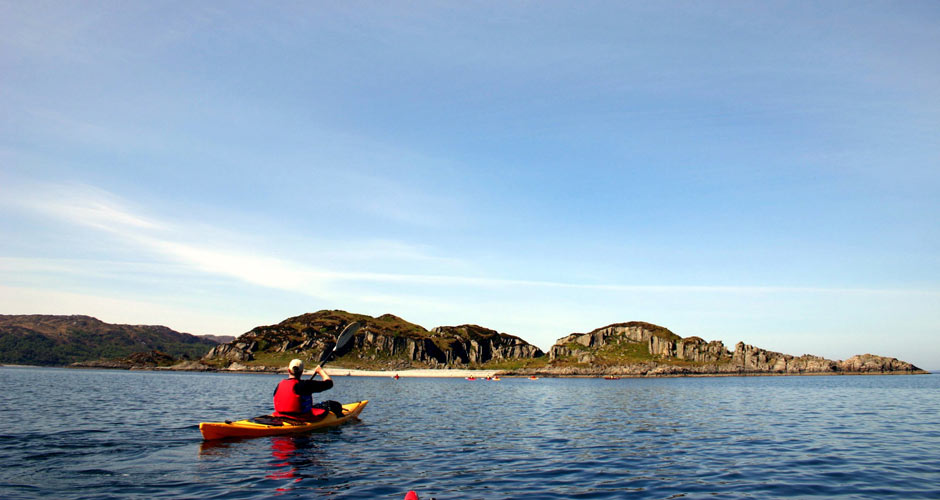
Kayaking in the Hebrides, Scotland View larger picture
Kayaking in the Hebrides, Scotland

FIVE IN BRITAIN

Kayaking in the Hebrides

A few days' kayaking around stunning Hebridean islands will do more for your muscles – and your soul – than a couple of weeks on a rowing machine in a gym ever could. Award-winning adventure specialist Wilderness Scotland has extended its Scottish Sea Kayak Trail – listed as one of National Geographic's 50 Tours of a Lifetime in 2011 – to explore the southern section between the sand-fringed isle of Gigha and Oban. Those worried about aching limbs will be pleased to learn that a bed, hot shower and excellent pub meal await at the end of each day on the water. The six-day trip costs £845pp, including breakfast and packed lunches, all equipment and guide, with four departures between 26 May and 1 September.
If that doesn't sound challenging enough for you, how about kayaking around the Sound of Arisaig, camping on an uninhabited island and living off the fat of the land (think campfire meals of shore-gathered mussels with seaweed) and a nip of whisky to ward off the evening chill. Five nights' kayaking and bushcamping costs £625-£650pp.

Adventure weekend in the Lakes

Adventure weekend in the Lakes UK-based Field Skills (fieldskills.com) specialises in remote and fairly hard-core expeditions in Borneo, Ladakh and Morocco – but it also runs a number of mini, taster trips on its doorstep, in the Lakes. On the Lakes Adventure Weekend you'll set up an unsupported camp in the woods, spend the night in a hammock, go for a hefty hike and pick up some new skills along the way (navigation, preparing a fire lighting, camping). The two-day trip, running 12-13 May, costs £170pp and includes meals, instruction and activities.
Careful though – this is the sort of experience where, warmed by the campfire after an exhilarating day out hill walking, you find yourself signing up for a two-week jungle survival challenge.
Field Skills is one of a number of small, local activity and adventure specialists listed on muchbetteradventures.com.

Fitness camp on the Isle of Wight

Wildfitness, Isle of Wight Wild Fitness (wildfitness.com) started out running luxury bootcamps in Kenya with a fairly strict programme of activities – barefoot running, circuits on the beach, sea swims – aimed at getting results, with experts on hand to offer advice and motivation. Last year it extended its reach to the rather less exotic, but more accessible, location of the Isle of Wight where it has distilled its philosophy into a fitness boosting weekend. The three-day "energizer course" involves early morning runs, boxing sessions in the woods, breathing classes and beach games. It is based at Northcourt, a lovely old manor house in an area of outstanding natural beauty, where healthy breakfast, lunch and dinner are served. Trips start in April, and cost from £650pp for a shared room (a single superior room is £1,085), including all activities and meals (these early bird prices are valid for bookings made before 31 January).

Walking around Wales

Rhossili Bay, Gower Now here's a challenge for 2012 – walk round Wales. Come May, you'll be able to do just that, thanks to a major project that has linked up several long-distance paths creating a continuous 870-mile route round the coast of Wales. The official launch of the Welsh Coast Path is planned for 5 May but many stretches can already be walked, and details of some of the best walks, both short and long in each of the regions, can be found at ccw.gov.uk (a dedicated website will be launched when the path opens).
They include 13.8-mile Great Orme Circular Trail, which affords fantastic views across the whole north Wales coastline or the six-mile RSPB Rhossili Coastal Trail in Gower, south Wales, a mix of dramatic cliffs, beach and wild seascape.
Or check out Ramblers Cymru for organised guided walks. Another way to stretch your legs and breathe in some salty sea air is to take part in one of several Welsh walking festivals, including those in Gower, Snowdonia and Monmouthshire.

Olympic trek across London

The Olympic Stadium in Stratford will be the focal point for next year's Games The Olympic Stadium in Stratford, with Canary Wharf beyond. Photograph: Graham Turner for the Guardian Fancy seeing where this summer's Olympics will take place? Then join this marathon walk across London. Discover Adventure, has launched a one-day, 26-mile trek setting off from the Olympic Park in Stratford (home to the Olympic stadium and village). Going at your own pace (the walk takes between eight and 12 hours), you'll pass Lords Cricket Ground (host to the archery events), Hyde Park (triathlon and marathon swimming) and the Horse Guards Parade Ground (beach volleyball) before culminating at Greenwich Park and the North Greenwich Arena/the O2 (equestrian events and the modern pentathlon). Leaders will be on hand to steer you in the right direction and there will be designated snack stops. Trips depart 13 May and 1 September 2012 and 31 August 2013. Registration fee is £49pp.

AND FIVE ABROAD

Triathlon camp in France

Triathlon weekend, Lake Annecy Triathlons have moved beyond the realm of professional athletes and become increasingly popular among "ordinary" people looking for a sporting challenge. If you've got your sights set on completing one this year, but need some guidance, a triathlon camp could be just the ticket. Adventure in the Alps offers a week-long retreat hosted by current world champion Christine Hemphill, with one-on-one assessment and video analysis.
Based at a chalet on the shore of Lake Annecy from 12-18 May, the £1,200pp price includes all training – incorporating a mini triathlon, six nights' full board, snacks and water, personal assessment and transfers. Flights (to Geneva), one dinner, insurance and spa treatments are extra. The company also offers running camps, walking holidays, yoga, tai chi and pilates retreats as well as a fitness retreat specifically for over-50s.

Running in New Zealand

Top of the South Island Tour, New Zealand I'm going for a run. I may be some time ... Running Wild has launched a guided trail run across the northern part of New Zealand's South Island. Covering a daily average of 25km over five to six hours, the eight-day trip starts with a 26km run along the northern end of the Queen Charlotte Track, and ends with 35km along the Abel Tasman coastal track – taking you on breathtaking routes through beech forests, alongside beautiful lakes, over ridge tops and around high alpine tarns. The trip departs 25 February and costs NZ$2,850pp (about £1,430) including full board accommodation, guiding and portage of luggage. Running Wild also organises customised trips.

Mountain biking in Italy

Italy, Dolomites, Mountain bikers Photograph: Alamy Riding through pastures and meadows, past lakes and streams with the stunning Dolomites as your constant backdrop, you will barely notice your fitness levels rising on this mountain biking holiday, so distracted will you be by the idyllic scenery. Over eight days you will be guided across the Dolomites, over-nighting in mountain rifugios. Organised by The Healthy Holiday Company (0845 458 0723, thehealthyholidaycompany.co.uk), trips are bespoke, with no set departure date, and start from £1,390pp based on a minimum group of two, including accommodation, meals, bike hire and guiding for the week. Flights (to Innsbruck) and transfers are extra. Details of the trip will be on the new website launching next week.

Swimming in the Caribbean

British Virgin islands, Gorda Photograph: Alamy Feel pretty confident in the water? How about swimming from Britain to the US? That's the British Virgin Isles to the US Virgin Isles – but, still, this Swimtrek trip around idyllic Caribbean isles and cays features some of the longest daily swims in the company's portfolio. Island hopping through pristine waters, swimming over reefs and along coasts, there's also time out of the water for guided walks and technique analysis. If you like the idea of this Caribbean holiday, you'd better get your flippers on – there are just four places left on the 30 March departure. Based at the Leverick Bay Resort on Virgin Gorda (pictured above), the trip costs £1,200 including all breakfasts and lunches, but not flights or evening meals.

Walking in Germany

Burg Rheinstein castle overlooking the Rhine. Burg Rheinstein castle overlooking the Rhine. Photograph: Alamy This might stretch the definition of healthy for some, but for anyone after a gentle trip where you can go at your own pace in your own company, this is perfect. New from On Foot Holidays is a self-guided walk along the 65km Rhine Gorge (graded medium-hard), focusing on the waterway's lesser-known west bank (the RheinBurgenWeg) as well as on the well-trodden east side.
Walking between the gorge's 20 castles and fortified, Unesco-sanctified villages, there are plenty of beer gardens and Riesling vineyards en route for anyone who likes to keep their spirits up with a glass or two of the local tipple. Available May–October, the trip costs from £670pp including eight nights' B&B, one dinner and route information. Travel extra.